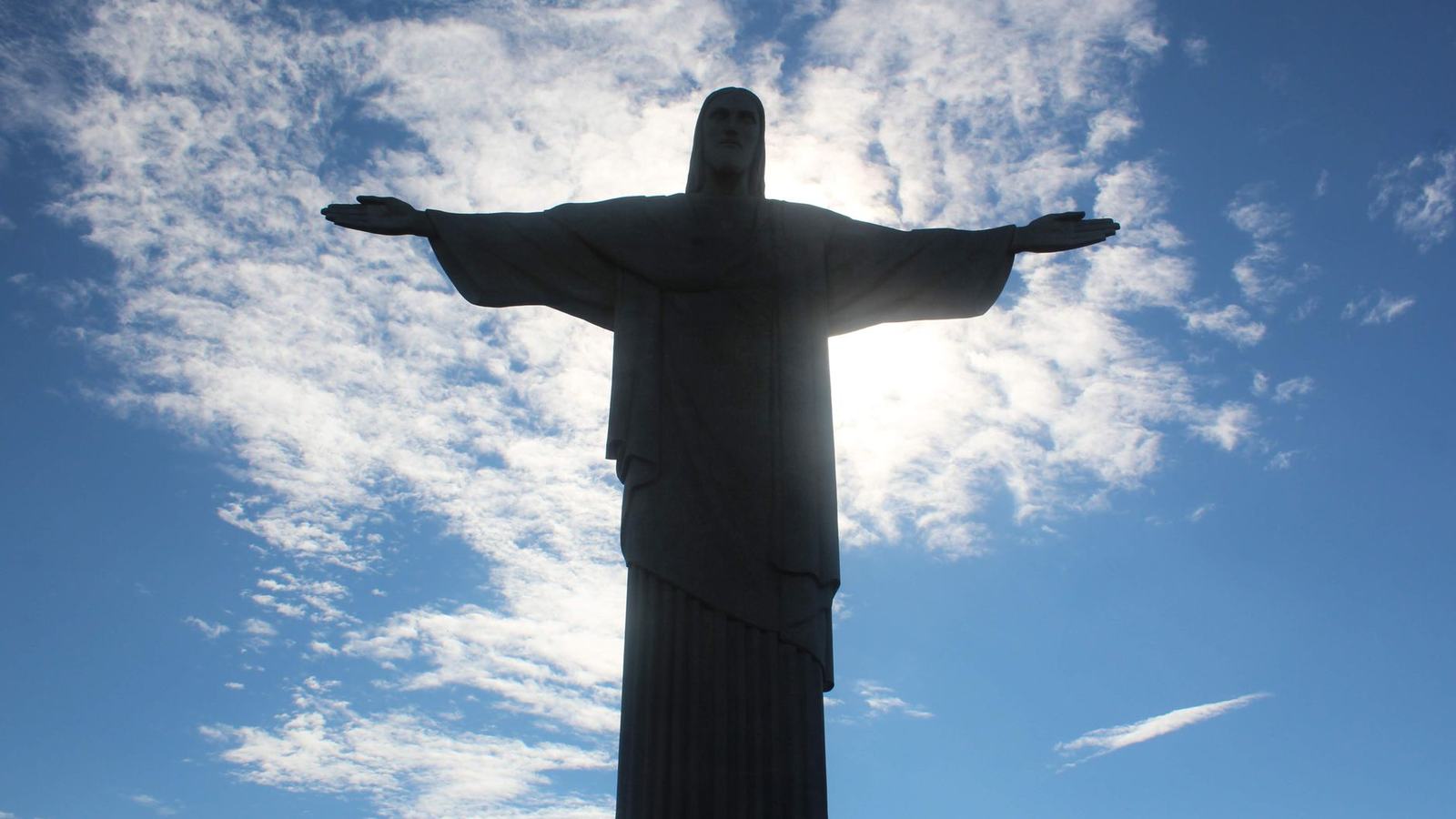
Christ the Redeemer was completed in 1931 and stands on the summit of Corcovado inside the Tijuca National Park — the world's largest urban rainforest. Two official routes go up: the cog railway from Cosme Velho, a twenty-minute climb through the forest that has run since 1884, and the official vans from Paineiras or Largo do Machado. Both are timed, both should be booked online, and both end at the base of the statue with 220 steps (or escalators and lifts) to the viewing platform.
The rule everyone learns the hard way: look at the statue from the beach before you buy the ticket for that morning. When cloud sits on Corcovado — common on summer afternoons — you will stand in white fog with a statue you cannot see. Rio's webcams and the view from Ipanema or Copacabana tell you instantly. Clear mornings after a night of rain give the sharpest views over Guanabara Bay, Sugarloaf and the Maracanã.
The platform is small and busy; the classic photo needs you lying on the ground with the camera pointed up, and everyone is doing it. Spend twenty minutes, then look outward — the point of the summit is the city laid out beneath the arms. Combine it with Sugarloaf Mountain's two-stage cable car the same day: Corcovado in the morning, Sugarloaf for sunset, with the Botanical Garden or Santa Teresa in between.
Stay in Ipanema or Leblon for the beach and restaurants, or in Santa Teresa for the hillside bohemian version of Rio. A chauffeur from Galeão and for the day's loop (Cosme Velho station, the Botanical Garden, Urca for Sugarloaf) removes the taxi negotiations and is the standard recommendation for first-time visitors.
Three things to get right
- Check the summit for cloud from the beach before you go up.
- Book the cog railway online; the 8 a.m. departure is the quiet one.
- Corcovado in the morning, Sugarloaf at sunset — the two-peak day.