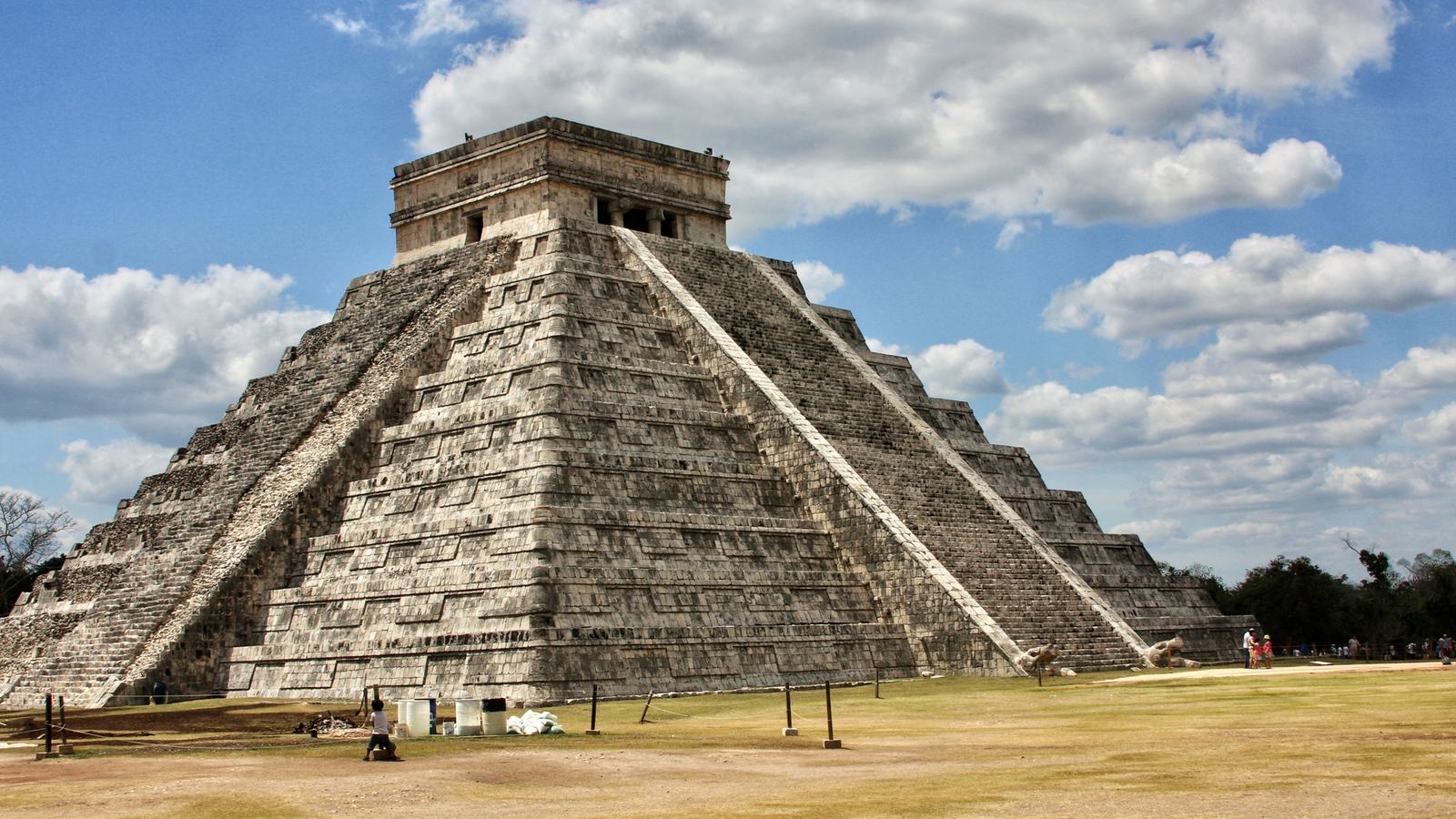
Chichén Itzá flourished between roughly 600 and 1200 CE as one of the largest cities of the Maya world, and what stands today — the Pyramid of Kukulcán (El Castillo), the Great Ball Court, the Temple of the Warriors with its thousand columns, the observatory known as El Caracol — is a fusion of Maya and central-Mexican Toltec styles. El Castillo's four staircases of 91 steps plus the platform make 365; at the equinoxes the afternoon sun throws a zigzag shadow down the northern balustrade that ends at a carved serpent head. Climbing has been prohibited since 2006.
The site opens at 8 a.m. and the day-trip coaches from Cancún and the Riviera Maya begin arriving around 10:30. In the two-and-a-half-hour gap you can walk the whole site in comparative peace and hear the famous clap echo — a chirp like the quetzal bird — at the base of El Castillo without a hundred other people clapping. By noon in April it is 35°C and packed.
The practical route is a private car leaving Cancún at 5:30 a.m., two and a half hours on the toll highway, the site from 8 to 11, then lunch in the colonial town of Valladolid and a swim at Cenote Ik Kil or the quieter Cenote Suytun before the drive back. Stay overnight at one of the hotels beside the site's entrance — the Mayaland or the Hacienda Chichén — and you can be inside the moment the gates open and again for the evening light-and-sound show.
Tickets are a two-part federal and state fee paid at the gate (cards accepted); licensed guides wait at the entrance and are worth hiring for ninety minutes. A chauffeured day trip is the comfortable version of this journey — the hotel-zone coach tours are cheaper and spend the best hour of the day in a souvenir stop.
Three things to get right
- Leave Cancún at 5:30 a.m.; be at the gate at 8.
- Valladolid for lunch, a cenote for the swim, back by dusk.
- Overnight at the site if you want the empty 8 a.m. plaza twice.
Book it
Nearest featured destination: Cancun — hotels, airport and activities on one page.