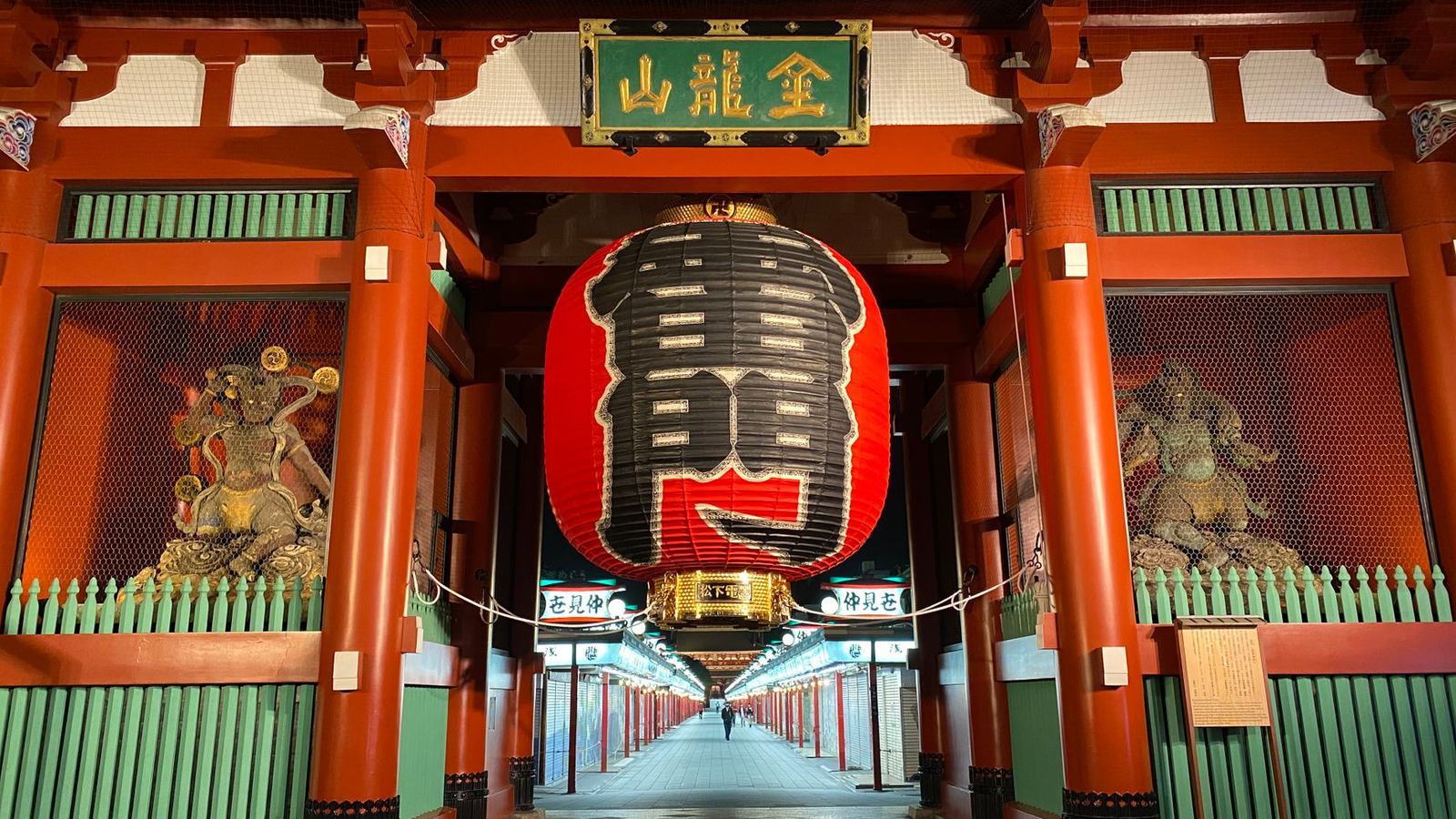
Sensō-ji begins at the Kaminarimon, the Thunder Gate, with its four-metre red lantern and the wind and thunder gods glaring from either side. Through it runs Nakamise-dōri, 250 metres of stalls selling ningyo-yaki cakes, rice crackers and folding fans, ending at the Hōzōmon gate and the main hall. The temple's founding legend dates to 628, when two brothers pulled a golden statue of Kannon from the Sumida River; the hall you see is a 1958 rebuild after the war, but the incense, the crowds and the ritual are unchanged.
The grounds are open around the clock and the main hall from 6 a.m. (6:30 in winter) to 5 p.m. That gap is the secret: walk Nakamise at dawn while the shutters are still down and painted with murals, watch the first worshippers waft incense smoke over themselves at the jōkōro cauldron, then come back after dark when the five-storey pagoda and the gates are floodlit and the day-trippers have gone.
Draw an omikuji fortune for 100 yen — shake the metal box, pull the numbered stick, take the matching paper from the drawer. Bad fortunes are tied to the racks so the temple keeps the luck; good ones you take home. Asakusa's side streets are worth an hour too: Hoppy Street's yakitori stalls, the Kappabashi kitchenware district ten minutes west, and Tokyo Skytree across the river.
Asakusa itself has excellent mid-range hotels with Skytree views and is on the Ginza line, but it is far from Shinjuku and Shibuya. A chauffeur from Haneda makes Asakusa a 35-minute door-to-door arrival rather than a two-train transfer with luggage.
Three things to get right
- Dawn and after dark are the two hours worth planning around.
- Nakamise's shutters are painted with Asakusa scenes — visible only before the shops open.
- Kappabashi, ten minutes west, is where Tokyo's chefs buy their knives.
Book it
Nearest featured destination: Tokyo — hotels, airport and activities on one page.