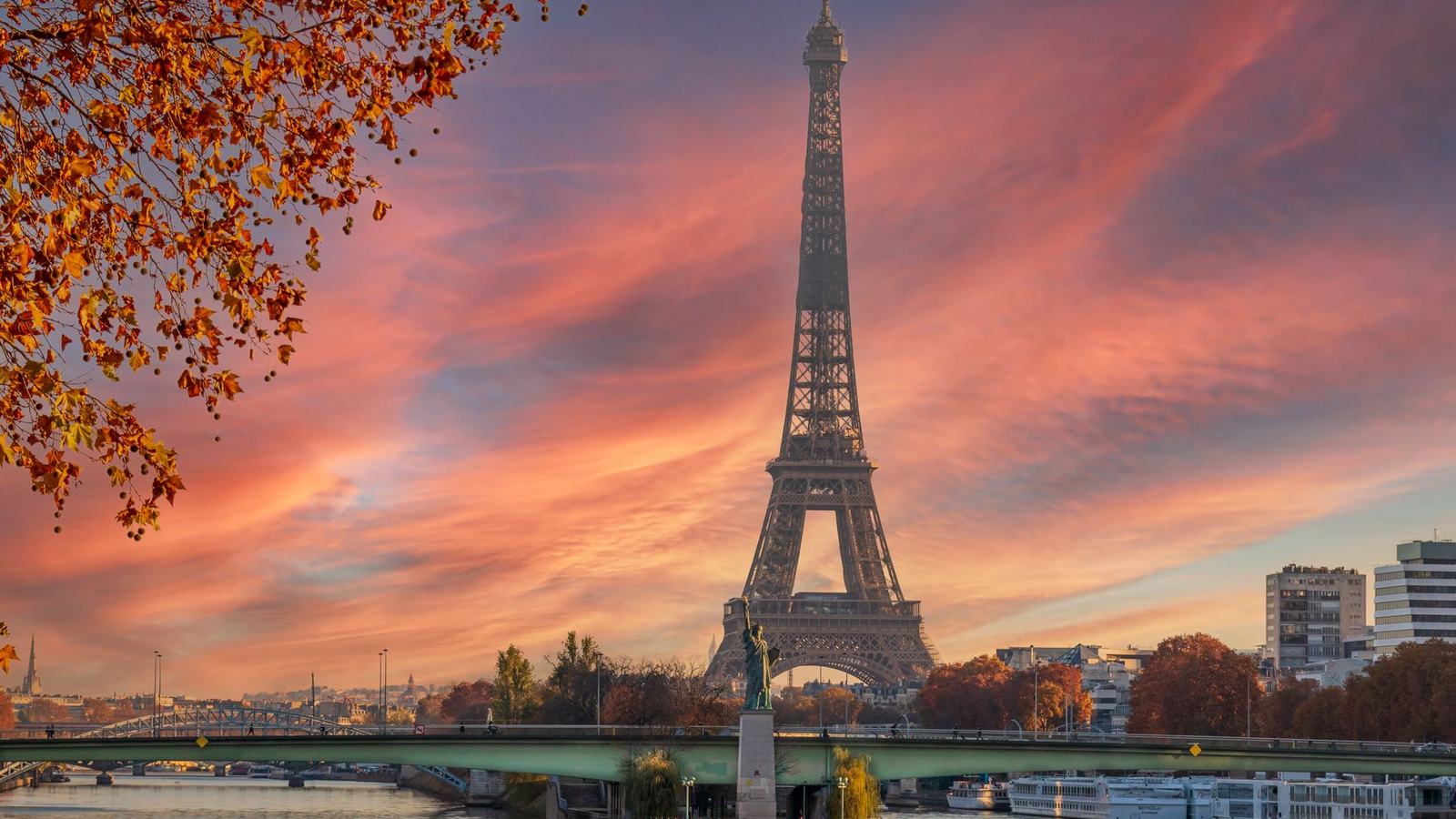
The Eiffel Tower has three visitable levels and the choice between them shapes your whole visit. The second floor, 115 metres up, is where the postcard view lives — close enough to read the city, high enough to see the Seine curve past the Louvre and out to La Défense. The summit at 276 metres is thrilling, colder and busier, and on a hazy day it can actually show you less. If you have one ticket to buy, buy the second floor and go up at dusk.
There are two ways up. Lift tickets sell out days ahead in high season and are timed to a 30-minute window; stair tickets to the second floor are cheaper, rarely sold out, and the 674 steps take a fit adult about twenty minutes with photo stops. The stairs also skip the longest queue on the Champ de Mars. Buy either through the official site or a timed activity ticket, and arrive fifteen minutes early — security screening at the base is thorough.
The hour matters more than the day. The tower sparkles for five minutes at the top of every hour after dark, and from the second floor at blue hour you get the lights of the city coming on beneath you. Morning slots (9–10 a.m.) are the quietest for the summit; late-evening slots give you the sparkle and a shorter security line.
Where to stay depends on whether you want the tower in your window or a short walk from it. The 7th arrondissement and the Trocadéro side of the 16th are the classic choices; Saint-Germain and the Marais give you a better neighbourhood with a fifteen-minute taxi. A chauffeur from Charles de Gaulle takes about 50 minutes outside rush hour and removes the RER-with-suitcases experience entirely.
Three things to get right
- Book the second floor by lift or stairs, not the summit, for the best view-per-minute.
- Timed tickets release roughly 60 days ahead on the official site — set a reminder for summer dates.
- Pair it with a Seine cruise from Port de la Bourdonnais, a five-minute walk away.
Book it
Nearest featured destination: Paris — hotels, airport and activities on one page.