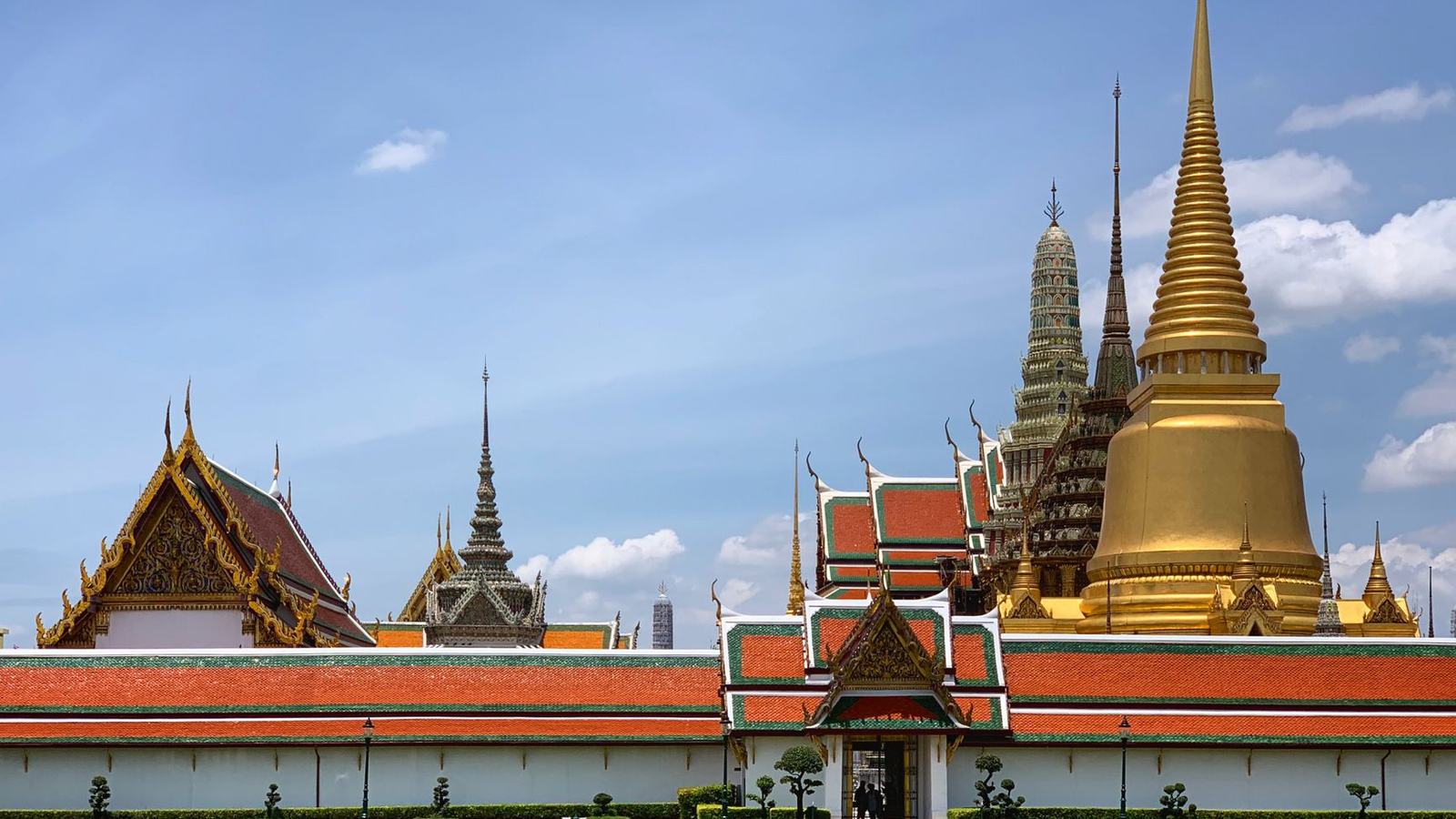
The Grand Palace was the seat of the Siamese kings from 1782 and its walls enclose throne halls, gilded chedis, guardian demons twelve metres tall, and the Temple of the Emerald Buddha — Wat Phra Kaew — where the small green figure that is Thailand's most sacred image sits high on a golden altar, dressed in a seasonal robe changed by the King himself. Photography is forbidden inside the temple; everywhere else it is encouraged.
The dress code is enforced at the gate and it is strict: shoulders, upper arms and knees covered, no leggings, no ripped jeans, no see-through fabric, and shoes on (removed only inside the temple). Rental wraps exist near the entrance but the queue for them is its own ordeal. Arrive dressed correctly and you walk straight to the ticket office; foreign visitors pay a flat fee that includes the palace, the temple and the textile museum.
Bangkok's oldest scam operates on the pavement outside: a friendly stranger tells you the palace is closed for a ceremony and offers a tuk-tuk to a 'special' temple and a gem shop. The palace is open every day from 8:30 a.m. to 3:30 p.m. Walk to the gate and check for yourself.
Wat Pho, with its 46-metre reclining Buddha, is a ten-minute walk south, and the cross-river ferry to Wat Arun leaves from the pier beside it — that trio is the classic old-Bangkok morning. Stay along the river (the Riverside hotels have their own boat shuttles) or in Rattanakosin for walking distance; a chauffeur from Suvarnabhumi is the way to avoid the airport taxi queue.
Three things to get right
- Shoulders and knees covered, no leggings — the gate turns people away every hour.
- It is never 'closed today'. Walk to the ticket office.
- Follow with Wat Pho and the ferry to Wat Arun for the complete old-city morning.
Book it
Nearest featured destination: Bangkok — hotels, airport and activities on one page.