Why this guide: about 12,100 people a month search Google for “best places to see northern lights” (US, DataForSEO Labs, September 2026). This is the answer we would give a client, written to be booked from.
The short answer
- Best oddsAbisko (Sweden's 'blue hole' of clear sky), Tromsø and the Lyngen Alps, Yellowknife (flat, dry, 240 aurora nights a year), Fairbanks, Finnish Lapland's Inari and Ivalo
- Best experienceTromsø for the fjords and the chase tours, Lofoten for the peaks, Finnish Lapland for glass igloos and huskies, Iceland for the landscapes by day, Svalbard for the polar night
- WhenLate August to early April; September–October and late February–March for milder weather and the equinox peak; December–January for the longest darkness; 2024–2026 is the solar maximum
How it works
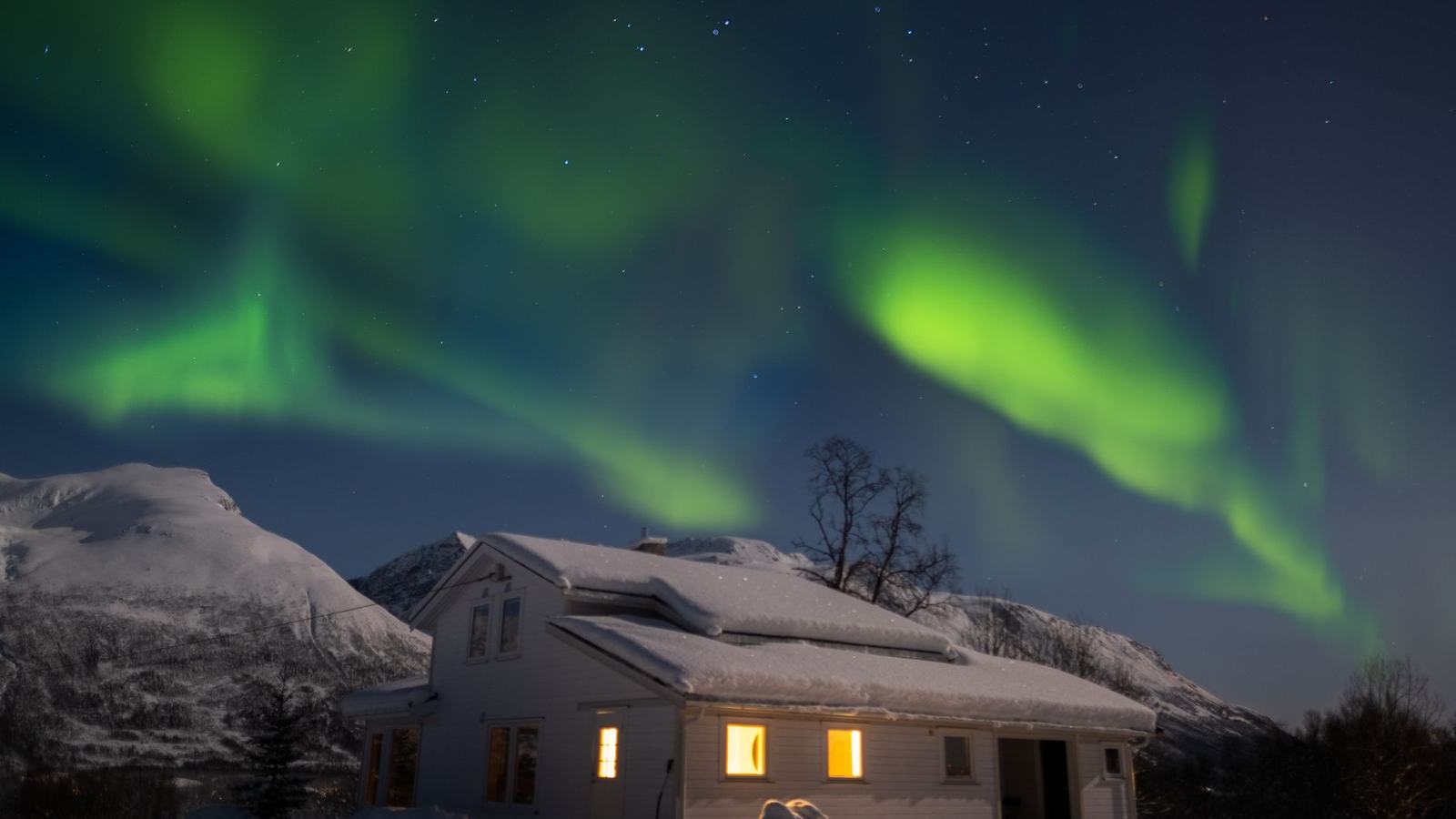
The aurora happens when the solar wind's charged particles hit the upper atmosphere along the auroral oval — a ring at roughly 65–72° north. Under the oval, on any clear dark night, the lights are likely; south of it (Reykjavik at 64°, Tromsø at 69° is inside), you need a stronger storm. The sun's 11-year cycle peaked in 2024–2025 and stays high through 2026, meaning more and stronger displays and sightings further south. The KP index (0–9) forecasts strength; KP 3+ is good under the oval. Clouds and the full moon are the enemies; darkness (no twilight) is the requirement, which rules out May–July at these latitudes.
Norway, Sweden and Finland
Tromsø (69°N) is the best-served base: flights from Oslo and London, a real city, and a chase-tour industry that drives to wherever the sky is clear — often into Finland or the Lyngen Alps — with 70–80% success rates over three nights. Lofoten's peaks and fishing villages for the most dramatic foreground; Senja for quiet; Alta for the snow hotel. Abisko in Sweden (68°N) has the Aurora Sky Station and a microclimate that keeps its sky clearer than anywhere in Scandinavia — the statistical best bet in Europe; Kiruna and the Icehotel at Jukkasjärvi nearby. Finnish Lapland: Rovaniemi's Santa Claus Village (touristy but with flights), Saariselkä and Inari for the wilderness, Kakslauttanen and Levi for the glass igloos and aurora cabins that let you watch from bed; Utsjoki at 70°N for the highest odds.
Iceland, Canada, Alaska and beyond
Iceland (64–66°N) is at the oval's southern edge, so it needs KP 3+, and its Atlantic weather is cloudy — but the landscapes by day (the south coast, the Snæfellsnes peninsula, the Westfjords) make a three-night gamble worthwhile, and Reykjavik is the easiest flight from North America. Yellowknife in Canada's Northwest Territories (62°N but directly under the oval) has flat, dry, cloudless winters and claims 240 aurora nights a year — the best odds on the continent, with Aurora Village's teepees; Whitehorse in the Yukon is the more scenic base; Churchill combines the lights with polar bears in October–November. Fairbanks, Alaska (65°N) with Chena Hot Springs for watching from the water. Greenland's Ilulissat and Kangerlussuaq (now with a new airport) for the lights over icebergs; Svalbard (78°N) for the polar night from November to January, when the lights can appear at midday.
Planning the trip that sees them
Stay at least three nights, ideally five — a single night is a coin toss. Go in the new-moon week. Book the chase tour (Tromsø, Abisko, Yellowknife) on the first night so a cloudy base is not the end; a chase minibus with a guide who reads the cloud maps beats a hotel window. Choose accommodation with a view north and low light pollution — the glass igloos (Kakslauttanen, Levin Iglut, Arctic TreeHouse), Aurora Village's teepees, a Lofoten rorbu, a Lyngen lodge, or a Finnish wilderness cabin. Fill the days: dog sledding, snowmobiles, reindeer farms, the Icehotel, whale watching in Tromsø (November–January), the Sami culture. Dress for −20°C: base layers, down, insulated boots, hand warmers; the tour operators lend thermal suits. Check the aurora forecast apps (My Aurora Forecast, NOAA's 30-minute forecast) and the cloud cover hourly.
Booking it
The engine has destination pages for Tromsø, Lofoten, Abisko/Kiruna, Rovaniemi, Ivalo, Reykjavik, Yellowknife, Whitehorse, Fairbanks and Ilulissat; Vacation Packages bundle the flight (Tromsø via Oslo, Rovaniemi via Helsinki, Yellowknife via Calgary or Edmonton, Fairbanks via Seattle); the glass igloos and aurora lodges are in the hotels search and book six to nine months ahead for December–February. The chauffeur booker covers the airport at the departure end; at the destination, the tours collect from the hotel. See our best places to travel in January and February guides.
Three things to get right
- Three nights minimum, in the new-moon week, with a chase tour on night one.
- Abisko and Yellowknife have the clearest skies; Tromsø the best infrastructure.
- 2024–2026 is the solar maximum — the odds are the best in a decade.